‏إظهار الرسائل ذات التسميات science. إظهار كافة الرسائل

السبت، 5 مايو 2012

Mosses (Bryophyta)


Mosses (Bryophyta)
CHARACTERISTICS:
  1. Not have roots and leaves of a true, well not yet have a real vessel.                                                                     
  2. Roots, absorbing organ is rizoid haranya. 
  3. Moss plant leaves can photosynthesize.


Rotation descent
        
Moss has rotation descent in the life cycle . What is known as the stage of mosses is the gametophyte (gamete-producing plants) are haploid " 

Thus, there is tumbuhanlumut males and females as a single plant can not produce two sex cells simultaneously.

Male sex cells ( sperm cells ) generated from anteridium and female sex cells ( egg or ovum ) is located in thearkegonium . Both of these sex cells producing organs located at the top of the plant. Anteridium the cook will release the sperm cells. Sperm cells to swim ( fertilization occurs when wet environmental conditions ) to arkegonium to fertilize the ovum.

The fertilized ovum will grow into sporophytes are diploid (x = 2n) and short-lived (3-6 months to reach a stage of maturity).


Sporophytes will form a capsule called sporogonium at the end. Sporogonium containing haploid spores are formed through meiosis .  Sporogonium cook will release the spores. The spores grow into a files calledprotonem .  These files grow and expand at a certain stage will foster a new gametophyte. "

Classification of mosses


Classification 
consists of three classes, namely:
  1. Hepaticopsida class (Hepaticae)
  2. Anthocerotopsida class (Anthocerotae)
  3. Bryopsida class (Musci)

1.Hepaticopsida
Characteristics - The characteristics Hepaticopsida

  1. Gametophyte is green, flat, dorsiventral, the structure is simple or terdifrensiasi talus on the stems and leaves, attached to the ground by using rizoid
  2. Sporofit not have cells that contain chloroplasts and in it there is no kolumella
  3. Spores do not germinate through the establishment of Prototype
  4. Asexual propagation
  5. fragmentation
  6. bud formation (Gemma) in marchantia example, Lunularia and Blasia
  7. Establishment of branch shoots fluitan Riccia example, Targionia and Reboulia
  8. The formation of tubers (tuber) Petalophyllum eg, Anthoceros
  9. Thickening of the end of the talus Anthalamia example,


Liver moss 
2.Kelas Antheroceropsida / Moss Horn
Characteristics - Characteristics:
  1. Sheet-shaped gametophyte
  2. Elongated tubular sporophytes upward, like a horn
  3. In the "horn" is produced spores
  4. Talus homogeneous anatomical structure, each cell mengandng one chloroplast with a large pirenoid
  5. porogonium capsule consists of foot and alone,
  6. Prototype does not form spores germinate,
  7. Asexual propagation with liver moss
  8. Terdiri 1 yaitu Ordo Ordo Anthocerotales. Contohnya: Anthoceros, Phaeceros, Megaceros give Denroceros
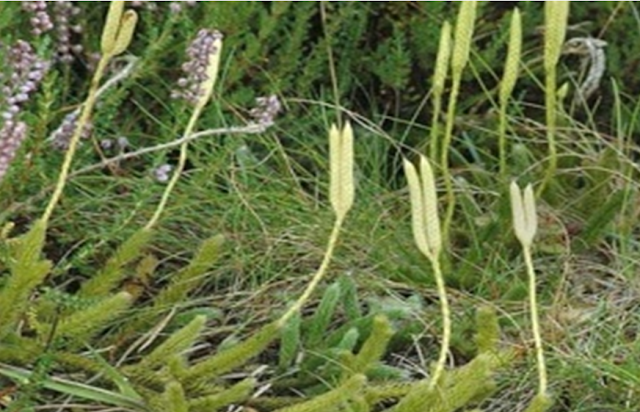
    Moss Horn  


Bryopsida 3.Kelas 
class is the largest and highest levels of development among the three classes briopyta. Known as the moss leaf
Characteristics:
  1. Prototype small leaf-shaped, each Bond will only form one gametopora
  2. Gametofora consisting of a branched stems with leaves and gameetofora not have rizoid
  3. porangium have wide feet, Seta only form of depression between the distance from the capsule. Not available in capsule peristom


Benefits of mosses
Some mosses used as an ornament layout. Several species of Sphagnum can be used as a skin and eye medications.
Moss growing on the forest floor to help keep rain erosion, reduce flood hazards, and can absorb water during the dry season.

السبت، 28 أبريل 2012

Leukocytes (white blood cells)


Erythrocytes and Leukosi
Leukocytes (white blood cells)

There are six leukocytes in the blood, neutrophils, eosinophils, basophils, monocytes, lymphocytes, and plasma cells. White blood cells that have granules or so-called granulocytes are neutrophils, eosinophils, and basophils. Whereas lymphocytes and monocytes are called agranulosit (not bergranula).

Most of leukocytes dibentk in bone marrow (granulocytes, monocytes, and lymphocytes) and partly in the network nodes (lymphocytes and plasma cells). The materials needed to be making leukocytes are vitamins and amino acids as well as other cells.

Adults have leukocytes around 4800-10800 leukocytes per cubic milliliter of blood, consisting of 62% neutrophils, 2.3% eusinofil, basifil 0.4%, 5.3% monocytes, 30% lymphocytes. The lifetime of different leukocyte granulocytes (neutrophils, eosinophils, and basophils) about 12 hours, monocytes is difficult to know because it is always wandering in the body, but presumably a few weeks or months, generally survive lymphocyte 100 -300 days.
Leukosit
In general, the benefits of leukocytes is to help the body against infection pertahannan intake. leukocytes are moving ameboid and phagocytic (prey).

Erythrocytes (red blood cells)


Erythrocytes (red blood cells)

Characteristics and functions

Mammalian erythrocytes have no nucleus so DNA. Mammalian erythrocyte shape bikonkaf , which forms the center of the disc with a slightly flattened . This form is to optimize the exchange of oxygen. Color depending on the hemoglobin of erythrocytes.Function is to assist erythrocyte hemoglobin binds oxygen. If the hemoglobin binds oxygen, the erythrocytes berwarnah red, and if the oxygen released by hemoglobin is bluish red erythrocytes.

Levels of hemoglobin (Hb) in the blood of a person varies, depending on sex and age of a person. In the normal condition of men dewsa Hb 13-18 g per 100 ml (g / ml). Hb levels of adult women is 12-16 (g / ml), while the baby is 14-20 (g / ml) of blood.

Erythrocytes also catalyze the reaction between carbon dioxide (CO ₂) and water, because erythrocytes contain carbonic anhydrase in large numbers. This reaction allows the blood to react with CO ₂ and transport from tissues to the lungs.


The number of erythrocytes also varies, depending on sex, age, and height of a person's residence. The number of erythrocytes in normal males from 5.1 to 5.8 million per cubic milliliter of blood and normal in women from 4.3 to 5.2 million per cubic milliliter of blood. People who live in the highlands tend to have more erythrocytes. Erythrocytes can be reduced more because there are a lot of wounds that bleed and anemia. Seseorag activity will affect the blood circulation so that oxygen is removed will vary for each person (Marieb, 2004; Solomon et al. 2005).

Formation of erythrocytes

The process of formation of red blood cells is called erythropoiesis . In the few weeks of life of the embryo in the womb, erythrocytesproduced from yolk sac. Several months later, the formation of erythrocytes occurs in the liver, spleen, and lymph glands. After the baby is born erythrocytes in the form of the bone marrow. Erythrocyte production stimulated by the hormone erythropoietin . Approximately at the age of 20 years, marrow in the proximal long bones are no longer in production. Most of the erythrocytes is derived from membranous bone marrow (spine, chest, ribs, and pelvis). With increasing age, bone marrow becomes less productive.

Share

Twitter Delicious Facebook Digg Stumbleupon Favorites More